

The Future of Software Development: AI, Cloud, Automation & Modern Engineering Skills

The Future of Software Development: AI, Cloud, Automation & Modern Engineering Skills

The modern developer desk is transitioning from manual code generation toward system orchestration, cloud architectures, and AI review.

The End of the “Human Compiler” Era

For more than four decades, software development was measured by lines of code written. A successful developer was someone who memorized complex language syntax, knew the idiosyncrasies of standard libraries, and spent their days typing out boilerplate algorithms, standard database queries, and routine API endpoints by hand.

That paradigm is ending. The convergence of generative artificial intelligence, distributed cloud primitives, autonomous CI/CD pipelines, and declarative infrastructure has initiated the largest structural transformation in computing history since the rise of high-level programming languages. Developers are no longer required to act as biological compilers.

Software development is not dying—it is expanding in scale and complexity. What is obsolete is the persona of the isolated programmer typing standard CRUD operations in a vacuum. To stay relevant in 2026 and throughout the next decade, software professionals must understand how AI, cloud topologies, automated operations, and new architectural paradigms are transforming what it means to build software.

1. The Rise of Agentic AI: From Code Autocomplete to Autonomous Teammates

The early phase of developer AI focused primarily on basic inline code completion—helpful autocomplete suggestions predicting the next two lines of an array filter or generating a standard regex expression. Today, AI has evolved into agentic workflows capable of executing complex, multi-step engineering sequences.

A. Multi-File Refactoring and Repository Context

Modern AI coding agents no longer parse code line-by-line; they ingest the entire structural abstract syntax tree (AST) of a codebase. When directed to “migrate our authentication layer from sessions to JWTs,” an agent can independently identify affected database models, modify API middleware, refactor client requests, generate mock tests, and open an initial draft pull request for human audit.

B. Automated Bug Triaging and Root-Cause Analysis

When an unhandled exception triggers an alert in production, agentic diagnostic systems immediately pull the stack trace, analyze the offending commit diff, inspect concurrent database locks, and generate an automated hotfix with accompanying unit tests before the on-call engineer finishes reading the incident notification.

C. The Developer as an Editor and Architect

Because the mechanical generation of syntax has dropped toward zero marginal cost, the programmer’s core responsibility has fundamentally inverted. The primary challenge is no longer writing the code; it is reviewing, verifying, and validating that the generated code is resilient, secure, maintainable, and aligned with domain constraints. Developers are evolving from typists into technical editors and system architects.

Cloud server room and data center hardware powering scalable applications
Modern cloud platforms abstract raw compute into distributed, serverless, and event-driven runtime networks.

2. Cloud-Native 2.0: Serverless Primitives and Platform Engineering

Managing virtual machines, manually provisioning ports, and maintaining bespoke operating system patches inside server environments is increasingly legacy work. Modern software engineering operates atop declarative, managed cloud infrastructure.

A. Serverless and Edge-Native Execution

The boundary between backend servers and global distribution has dissolved. Modern micro-runtimes execute on worldwide edge networks in single-digit milliseconds, scaling down to absolute zero cost when idle and scaling out instantly under sudden load surges without manual auto-scaling group definitions.

B. Platform Engineering Over DevOps Sprawl

For years, companies pushed developers to do everything—write code, manage Kubernetes pods, monitor networking, and troubleshoot Terraform state files. This created overwhelming cognitive overload. In response, modern engineering organizations are establishing Internal Developer Platforms (IDPs).

Platform engineering teams build golden paths: standardized internal portals where developers can provision secure, production-grade cloud environments, configure database replicas, and set up observability dashboards with simple declarative configuration files.

3. Autonomous Pipelines: The Maturation of CI/CD and GitOps

Deploying software used to be an event—a planned weekend maintenance window accompanied by downtime announcements and late-night war rooms. In modern software engineering, deployment is continuous, invisible, and automated.

  • Git as the Single Source of Truth (GitOps): Infrastructure declarations, application state, and security policies are version-controlled alongside application code. Merging a pull request into main triggers declarative orchestrators like ArgoCD to reconcile live cloud cluster states with zero human intervention.
  • Automated Canary Testing and Progressive Delivery: New feature builds are automatically routed to 1% of production users. Real-time telemetry monitors error budgets and API latencies; if performance degrades by even a fraction of a percent, the release rolls back autonomously before users notice.

4. The In-Demand Skills for Modern Engineers

As the baseline tools of software engineering change, the skills that command respect, leadership, and high compensation are shifting dramatically:

A. Systems Architecture & Trade-Off Analysis

AI tools can generate individual functions with ease, but they struggle to synthesize long-term technical trade-offs across large-scale distributed architectures. Knowing when to choose event-driven queues over synchronous REST endpoints, understanding data consistency guarantees (ACID vs. BASE), and designing fault-tolerant partitions remain exclusively human proficiencies.

B. Observability and Debugging Literacy

When an application spans dozen microservices across multiple cloud regions, finding why a specific customer transaction timed out is remarkably difficult. Engineers must be masters of distributed tracing (OpenTelemetry), log structuring, and telemetry analysis—diagnosing elusive concurrency race conditions and cascading failures in real time.

C. Security by Design (DevSecOps)

With automated code generation accelerating, supply-chain vulnerabilities, API key leaks, and insecure package dependencies are on the rise. Developers who understand zero-trust network design, automated static application security testing (SAST), software bill of materials (SBOM) validation, and cryptographic identity tokens (mTLS) are indispensable.

D. Domain Modeling and Clear Technical Writing

Clear thinking produces clear systems. The most successful developers are those who understand the core business domain deeply, communicate requirements precisely to both human stakeholders and AI tools, and write comprehensive architecture decision records (ADRs) that guide teams over years of product evolution.
The Final Perspective: The future of software engineering does not belong to those who can type code the fastest; it belongs to those who understand how systems fit together. By combining the speed of AI tooling with deep architectural discipline, robust cloud-native practices, and relentless automated verification, modern developers will build software faster, safer, and at a scale previously unimaginable.

QA Testing in 2026: Top Skills, Tools & Trends Every Fresher Should Know

QA Testing in 2026: Top Skills, Tools & Trends Every Fresher Should Know

Automated software quality metrics and predictive bug detection dashboard
Modern QA combines automated pipelines, real-time observability, and AI-assisted test frameworks.

The Great Reinvention of Software Quality Assurance

If you ask a tech veteran what entry-level QA looked like a decade ago, they will describe manually executing test cases, verifying UI buttons, and logging issues inside Jira tickets after a sprint was completed. For years, quality assurance was viewed as an downstream validation phase—a human barrier between finished software and customer deployment.

In 2026, that historical barrier has been completely restructured. High-performing engineering teams ship code into production multiple times an hour using cloud-native microservices, container orchestrations, and automated deployment pipelines. Waiting three days for a tester to manually execute a regression suite is no longer viable in high-velocity tech companies.

Does this mean software testing is disappearing? Quite the opposite. As systems become more complex and decentralized, software quality is more critical than ever. However, the nature of the discipline has changed. Freshers entering the industry in 2026 are not being hired as repetitive manual testers; they are being hired as technical guardians of software velocity. Here is the definitive breakdown of the core skills, modern toolsets, and architectural trends defining QA testing today.

1. The Non-Negotiable Skills for Freshers in 2026

A successful transition into modern Quality Engineering requires moving beyond basic test-case templates and embracing practical, programmatic capabilities:

A. Fluency in Modern Scripting and Programming

You cannot test modern software systems without being able to read and write code. Industry recruitment panels expect freshers to possess solid fluency in at least one primary programming language:

  • TypeScript / JavaScript: The undisputed language of modern web development and front-to-back testing frameworks.
  • Python: Highly favored for backend automation, API validation suites, and AI/ML pipeline testing due to its clean syntax and extensive package ecosystem.
  • Core Programming Fundamentals: Understanding asynchronous operations (promises, event loops), object-oriented principles, modular architecture, and structured data handling (JSON/YAML).

B. API-First Validation and Microservice Mechanics

The majority of critical defects in distributed software never appear on the user interface—they occur in data serialization, network latency, broken contract schemas, and authentication failures between microservices. Quality engineers prioritize testing APIs over testing visual buttons. Freshers must understand REST conventions, status code implications, GraphQL queries, and auth flows (JWT, OAuth 2.0).

C. Git and Pipeline Mechanics (CI/CD)

Automated tests that only run on a candidate’s local laptop offer minimal value to an engineering team. Modern QA professionals operate directly inside source-control systems:

  • Branching models, resolving merge conflicts, and writing clean pull request reviews.
  • Constructing CI workflows using GitHub Actions or GitLab CI that automatically trigger test jobs on branch pushes and produce clear failure diagnostics.
Intelligent automated software testing and debugging workflow illustration
Modern test automation balances end-to-end user journeys with granular, continuous API contract validation.

2. The Essential QA Toolchain for 2026

Knowing the theoretical foundations of testing is useless without familiarity with the tools companies actually deploy. Below is the modern toolstack separating job-ready candidates from the rest of the applicant pool:

End-to-End Web & Mobile Automation

  • Playwright: The industry standard for browser automation. Offers native support for multiple tabs, auto-waiting, network mocking, and resilient selectors across Chromium, Firefox, and WebKit without third-party drivers.
  • Cypress: Widely adopted for component testing and rapid developer-centric UI validation.
  • Appium & Maestro: The leading choices for mobile test automation, with Maestro gaining significant traction due to its fast, declarative YAML syntax.

API & Performance Verification

  • Postman & Bruno / Newman: Moving beyond manual GUI requests to executing automated Postman/Bruno collections via CLI in continuous deployment pipelines.
  • REST Assured / Pytest-Requests: Programmatic HTTP client libraries for deep backend integration testing.
  • k6: The modern, developer-friendly load and stress-testing tool written in Go that executes test scenarios scripted in JavaScript.

Observability and Issue Tracking

  • Log & Metric Inspection: Understanding how to read runtime logs via tools like Datadog, Grafana, or basic ELK stacks to pinpoint root causes rather than simply reporting “the button didn’t work.”

3. The Defining Trends Transforming QA

Staying competitive in the QA job market requires understanding where the industry is heading over the coming years:

A. AI-Assisted and Self-Healing Automation

AI has fundamentally altered how testing frameworks maintain themselves. Traditional locators (like brittle CSS selectors or complex XPaths) that routinely broke after minor UI re-renderings are increasingly augmented by self-healing mechanisms. These algorithms monitor application changes and dynamically update element references during test execution. Furthermore, generative AI tools are routinely leveraged to produce edge-case matrices, synthetic test records, and regular expression patterns in seconds.

B. Shift-Left and Shift-Right Quality

Testing is no longer restricted to a discrete verification phase midway through a release cycle:

  • Shift-Left: Quality engineers participate in early sprint planning and architecture sessions, conducting risk assessments and writing unit or component test criteria before developers write production code.
  • Shift-Right: Quality extends into production environments through canary deployments, feature flags, synthetic user monitoring, and chaos engineering exercises.

C. Security and Non-Functional Verification

Security is no longer isolated in a separate cybersecurity department. Quality engineers are increasingly tasked with baseline security hygiene—checking for SQL injection vectors, validating Cross-Origin Resource Sharing (CORS) rules, inspecting header protections, and auditing third-party open-source dependencies for known vulnerabilities.

4. Actionable 60-Day Roadmap for Freshers

If you are a fresher looking to build credible proof of competency before applying for QA or SDET roles, follow this focused timeline:

  1. Days 1–15: Code & APIs: Solidify your JavaScript or Python fundamentals. Master HTTP protocols and write automated API assertions using requests or SuperTest.
  2. Days 16–35: Modern UI Automation: Build a Playwright framework from scratch using TypeScript. Implement the Page Object Model (POM), configure multi-browser support, and incorporate automatic screenshot captures on failure.
  3. Days 36–45: CI/CD Pipeline Integration: Push your testing repository to GitHub. Configure a GitHub Actions workflow that executes your automated tests headless on every pull request and generates HTML test summary reports.
  4. Days 46–60: Project Deployment & Documentation: Add performance benchmarks with k6, link your live project on your resume, and write a detailed README.md articulating your test strategy, design decisions, and CI setup.

Final Thought: The role of the software tester has evolved from a passive bug reporter into a versatile software engineer specializing in quality. By dedicating your efforts to programming fundamentals, modern automation frameworks like Playwright, and automated CI/CD pipelines, you will enter the 2026 tech job market not as a replaceable manual tester, but as an indispensable engineering asset.

From Manual Testing to Quality Engineering: The Skills Freshers Need in 2026

From Manual Testing to Quality Engineering: The Skills Freshers Need in 2026

Software testing and automated debugging workflow illustration
Modern quality assurance has transitioned from manual spreadsheet checklists into programmable engineering disciplines.

The Sunset of the Pure Manual Tester

For years, manual software testing was considered the most accessible doorway into the technology industry. A fresher could learn the basics of the Software Testing Life Cycle (STLC), memorize test design techniques like boundary value analysis and equivalence partitioning, document step-by-step test cases in an Excel spreadsheet, and step into an entry-level QA role.

In 2026, that traditional doorway has narrowed significantly. The rapid proliferation of Agile delivery models, continuous integration/continuous delivery (CI/CD) pipelines, and intelligent testing frameworks has fundamentally altered engineering expectations. When production deployments happen multiple times per day, running through a 200-row manual regression sheet before a release is simply too slow.

Companies are no longer looking for testers who merely identify defects after software is written. They want Quality Engineers (QEs) and Software Development Engineers in Test (SDETs) who build resilient testing frameworks, automate validation pipelines, and prevent bugs before code ever reaches a production environment. For freshers entering the tech market, upgrading from a manual testing mindset to a Quality Engineering skillset is no longer optional—it is essential.

1. Solid Foundations in a Core Programming Language

The most defining difference between a manual tester and a Quality Engineer is the ability to write clean, maintainable code. Modern test suites are complex software applications in their own right, requiring proper design patterns, modular architecture, and version control discipline.

Rather than trying to sample multiple languages superficially, freshers should build strong proficiency in at least one industry-standard language:

  • TypeScript / JavaScript: Currently dominating the web testing space due to the surging popularity of modern frameworks like Playwright and Cypress.
  • Python: Widely celebrated for readability, rapid script development, and extensive support for backend API and data testing libraries like pytest and requests.
  • Java or C#: Still standard fixtures in enterprise enterprise banking, insurance, and large legacy ecosystems using established Selenium or Appium frameworks.

Freshers must understand object-oriented programming (OOP), asynchronous execution (promises, async/await), exception handling, and collection data structures to write reliable automation.

2. Modern End-to-End Automation Beyond Legacy Selenium

While Selenium WebDriver established the foundation of automated web testing, the industry has embraced modern automation frameworks engineered specifically for dynamic single-page applications (SPAs) and component-driven frontends.

Freshers aiming to stand out in technical evaluations should prioritize modern tooling:

  • Playwright: Fast, robust, and equipped with native auto-waiting, multi-tab execution, network request interception, and out-of-the-box browser context isolation.
  • Cypress: Renowned for developer-friendly local debugging, time-travel snapshots, and real-time reload capabilities.
  • Framework Architecture: Understanding how to structure an automation repository using clean design patterns—such as the Page Object Model (POM) or Screenplay pattern—while separating test data, configuration files, and custom utility functions.
Quality engineering telemetry dashboard displaying test runs and code review automation
Quality Engineers integrate automated tests into code review workflows and deployment pipelines.

3. The Priority of API and Contract Testing

One of the most common mistakes junior testers make is directing 90% of their automation efforts toward the graphical user interface (UI). UI tests are notoriously expensive to execute, slow to finish, and susceptible to flakiness caused by cosmetic DOM updates.

In modern microservice architectures, the vast majority of critical business logic lives behind REST endpoints, GraphQL schemas, and message queues. Quality Engineers follow the classic Test Pyramid, placing heavy emphasis on API validation:

  1. HTTP Protocol Mastery: Deep understanding of request headers, status codes (2xx, 4xx, 5xx), authentication tokens (JWT, OAuth 2.0), and JSON payloads.
  2. Tooling Proficiency: Moving beyond manual requests in Postman to writing automated integration scripts using tools like SuperTest, RestAssured, or Python Requests.
  3. Contract Testing: Validating that service providers and API consumers adhere to agreed interface definitions using tools like Pact, preventing unexpected breaking changes across distributed teams.

4. CI/CD Integration and Version Control (Git)

An automated script that only lives and executes on a local laptop does not provide continuous quality assurance. Automated tests must execute automatically whenever an engineer opens a pull request or merges code into a repository branch.

A job-ready Quality Engineer understands how automated tests fit into deployment workflows:

  • Git Etiquette: Branching strategies, resolving merge conflicts, and maintaining clean pull request histories.
  • Pipeline Configuration: Writing configuration files for GitHub Actions, GitLab CI, or Jenkins to trigger headless test runs, generate HTML artifacts, and alert teams on Slack when builds fail.
  • Containerization Basics: Using Docker to spin up isolated, reproducible browser instances or database dependencies so tests run consistently across local machines and cloud build runners.

5. AI Literacy and Test Intelligence Tools

In 2026, artificial intelligence is an everyday copilot for high-performing engineering teams. Quality Engineers who leverage AI to accelerate test authoring and maintenance maintain a significant advantage over those who resist it.

Freshers should be comfortable employing AI to:

  • Generate diverse edge-case scenarios, regex patterns, and synthetic test datasets.
  • Leverage visual regression platforms (like Applitools or Percy) that use computer vision algorithms to detect layout bugs without manual inspection.
  • Work with self-healing locator utilities that dynamically adapt to DOM changes and prevent false-positive pipeline failures.

6. Cultivating the “Quality Engineering” Mindset

Technical tools are only half the battle. What truly differentiates a Quality Engineer from a traditional tester is perspective. A tester asks, “Did this feature pass the acceptance criteria?” A Quality Engineer asks:

  • “How can we design this feature so it is inherently observable and easy to test?”
  • “Where are the performance bottlenecks under concurrent user traffic?”
  • “How does the system fail when an external payment gateway or database connection drops?”

This “Shift-Left” approach—intervening early during architecture discussions and code reviews rather than waiting for finished builds—is the cornerstone of modern software resilience.

The Path Forward: The narrative that software testing is dying is misleading. What has ended is the era of passive, non-technical manual verification. Quality Engineering in 2026 is an active, code-intensive engineering discipline. Freshers who invest their energy in programming fundamentals, API automation, CI/CD pipelines, and systems thinking will find themselves among the most indispensable assets on any software engineering squad.

How AI Helps Quality Engineering: Smarter Testing, Self-Healing Scripts, and Predictive QA

How AI Helps Quality Engineering: Moving from Reactive QA to Intelligent Verification

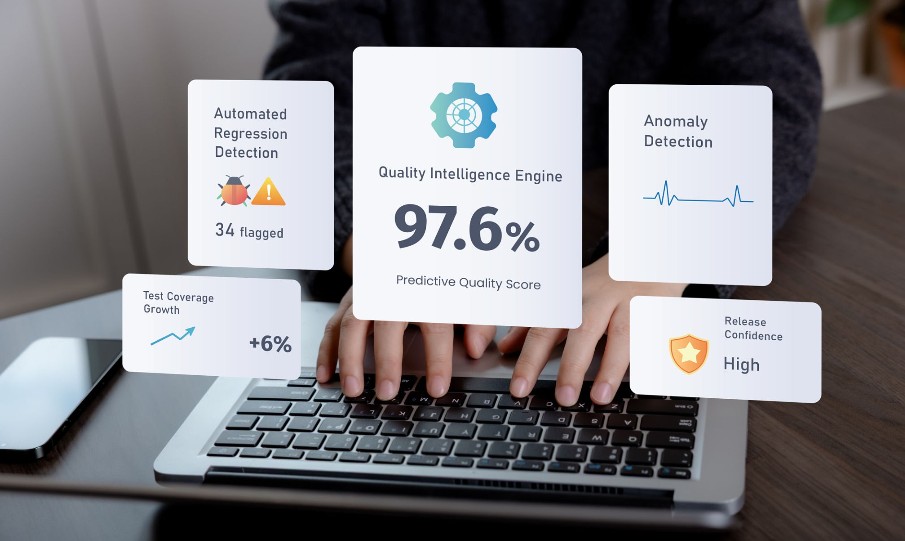
Automated software quality metrics and predictive bug detection dashboard
Predictive quality dashboards analyze code churn, failure rates, and test coverage to flag regressions before deployment.

The Bottleneck in Modern Continuous Delivery

Software development has accelerated dramatically over the last decade. Continuous integration and continuous deployment (CI/CD) pipelines allow engineering teams to merge code dozens of times every day. However, standard testing workflows frequently struggle to keep pace with this release velocity.

Traditional Quality Assurance (QA) has long been held back by brittle automation suites. A minor tweak to a front-end CSS class or an updated DOM element frequently breaks automated Selenium or Cypress scripts, triggering false positives. QA teams often spend more hours debugging, rewriting, and babysitting flaky test suites than actually examining deep business logic or system edge cases.

This is where Quality Engineering (QE) powered by Artificial Intelligence is transforming the discipline. AI does not merely execute tests faster; it fundamentally reimagines how test suites are constructed, healed, and prioritized across the development lifecycle.

1. Self-Healing Test Automation

The single greatest operational drain on automated testing teams is test maintenance. In typical end-to-end testing, script locators rely on rigid selectors like specific XPaths, element IDs, or class hierarchies. When an application UI evolves, tests break—even if the underlying business transaction remains completely functional.

AI-driven testing engines resolve this issue through dynamic, self-healing algorithms:

  • Multi-Attribute Object Recognition: Instead of relying on a single element identifier, AI engines analyze a constellation of attributes—including spatial position, accessibility tags, text labels, and parent-child hierarchies.
  • Automatic Locator Remediation: If a button ID shifts from #submit-btn to #checkout-confirm, machine learning models recognize the element’s intent and update the test locator in flight during test execution, logging the change without halting the deployment pipeline.
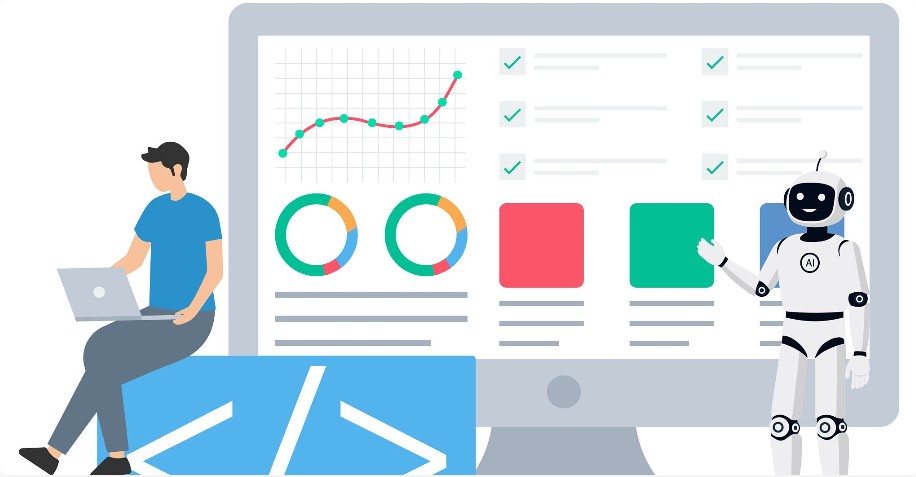
Illustration representing intelligent automated software testing and debugging
Intelligent testing engines bridge the gap between human design intent and automated pipeline execution.

2. Autonomous Test Case and Synthetic Data Generation

Writing comprehensive test scenarios manually is time-consuming and often constrained by human cognitive bias. Engineers tend to test for expected paths, frequently missing obscure corner cases, input boundaries, or atypical user workflows.

Generative AI models and LLMs ingest user stories, API contracts (such as OpenAPI/Swagger schemas), and production logs to generate testing assets automatically:

  • Edge-Case Scenarios: AI parses requirements and automatically generates matrixes covering malformed payloads, unicode inputs, boundary limits, and unexpected concurrency states.
  • Privacy-Compliant Synthetic Test Data: Using generative adversarial networks and structured transformers, teams can generate realistic test databases that mirror production distributions without exposing real customer personally identifiable information (PII).

3. Predictive Quality and Smart Test Selection

In large-scale enterprise codebases, running an entire regression suite can take several hours, consuming heavy cloud compute resources and delaying urgent hotfixes. Running all tests for every tiny code modification is inefficient.

AI enables Test Impact Analysis (TIA). By mapping historical commit histories, code diffs, code churn patterns, and previous defect hotspots, predictive machine learning models determine the precise subset of tests required to validate a specific pull request. High-risk application layers receive exhaustive testing, while unchanged modules skip redundant suites, reducing pipeline cycle times by up to 70%.

4. Visual AI and Cross-Device Layout Inspection

Functional automation can verify that a button triggers a checkout event, but it struggles to detect whether that button is rendered invisibly beneath an overlapping banner, clipped on a specific mobile viewport, or displayed with corrupted font kerning.

Computer vision algorithms analyze visual layers much like a human eye would. They evaluate visual stability across hundreds of viewport dimensions, highlighting real perceptual defects while intelligently ignoring negligible rendering noise like pixel shifts caused by anti-aliasing.

The Evolution of the QE Engineer: AI is not replacing quality engineers—it is elevating them. By offloading repetitive locator updates, boiler-plate script generation, and manual regression runs to AI engines, quality engineers can transition into strategic advisors who focus on system architecture, resilience engineering, security validation, and overall customer experience.

QA vs. QC in Software Testing: Key Differences, Practices, and Real-World Impact

In software engineering, Quality Assurance (QA) and Quality Control (QC) are frequently treated as synonyms. Job listings mix them up, software teams use them interchangeably, and clients often ask for “QA testing” when they actually mean “QC execution.”

While both are essential pillars of Quality Management, treating QA and QC as the same thing is a costly mistake. Confusing process optimization with product testing can lead to misallocated budgets, missed release deadlines, and software bugs slipping straight into production.

In this guide, we break down what QA and QC actually mean, how they differ across 16 core dimensions, how they operate in modern DevOps environments, and why enterprises need both to deliver reliable software.

Software quality assurance team managing process workflows and testing standards
Quality management requires both process assurance and product control.

1. What is Quality Assurance (QA)?

Quality Assurance (QA) is a proactive, process-oriented discipline focused on preventing defects before they occur. It defines the frameworks, standards, guidelines, and procedures that software engineering teams follow throughout the Software Development Life Cycle (SDLC).

QA asks the question: “Are we building the product in the right way?”

Core Characteristics of QA:

  • Focus: Process optimization and defect prevention.
  • Approach: Verification (evaluating documents, designs, architecture, and workflow standards without running code).
  • Scope: Involves the entire project team—developers, system architects, project managers, and business analysts.
  • Typical Activities:
    • Setting up coding guidelines, code review standards, and compliance policies.
    • Designing test strategies, test plans, and test automation frameworks.
    • Configuring continuous integration (CI) environments and automated build triggers.
    • Performing process audits and root-cause analyses on recurring bugs.

2. What is Quality Control (QC)?

Quality Control (QC) is a reactive, product-oriented discipline focused on identifying and correcting defects in the actual software product. It checks the finished code or build to verify that it meets the defined requirements and operational standards.

QC asks the question: “Are we building the right product, and does it function as expected?”

Core Characteristics of QC:

  • Focus: Product validation and defect detection.
  • Approach: Validation (executing code, running test suites, and examining application behavior).
  • Scope: Primarily driven by the dedicated testing/QC team.
  • Typical Activities:
    • Executing manual and automated test cases (functional, regression, smoke, performance, security).
    • Finding, documenting, and reporting bugs in defect-tracking systems (e.g., Jira).
    • Verifying bug fixes and performing re-testing before deployment.
    • Comparing actual output against expected system behavior.

3. QA vs. QC: Head-to-Head Comparison

To understand the operational contrast between Quality Assurance and Quality Control, let’s examine their differences across key software engineering metrics:

Comparison Metric Quality Assurance (QA) Quality Control (QC)
Primary Aim Prevent defects from entering the codebase Identify and fix defects in the existing software
Technique Preventive and strategic Corrective and diagnostic
Goal Establish and refine development processes Ensure the product satisfies specified requirements
Focus Process-oriented (how the software is built) Product-oriented (what the software actually does)
Timing Performed before and during development Performed during and after code build completion
Function Management and process improvement tool Technical verification and correction tool
Responsibility Entire engineering and management team Dedicated software testing and QC engineers
SDLC Method Verification (static analysis, reviews, workflows) Validation (dynamic execution, functional testing)
Code Execution Does not require executing code Requires executing the code or compiled build
Order of Execution Precedes Quality Control Occurs as a result of QA processes
Methods Used Document checks, architecture reviews, process maps Manual test execution, automated test scripts
Scope of Work Ensures the team is doing the right things in the right way Ensures the output meets end-user requirements
Defect Handling Reduces the probability of bugs occurring Finds, tracks, and confirms the resolution of bugs
Planning Goal Design processes that block error creation Design test plans that discover existing bugs
Tool Examples SonarQube, linters, CI/CD pipeline tools, test strategies Selenium, Postman, JMeter, Cypress, JUnit
Resource Effort Low continuous overhead once frameworks are set High execution effort per sprint or release cycle

4. How QA and QC Function in Modern DevOps & CI/CD

In traditional Waterfall environments, QA created documentation upfront, and QC tested the application at the end of the development cycle. In modern DevOps and Agile environments, these boundaries have shifted toward continuous quality.

[ Shift-Left QA ]

  • Sprint Planning
  • Architecture Reviews
  • Code Review Guidelines
  • Security Standard Policies
=== CI/CD Pipeline ===>

[ Continuous QC ]

  • Static Code Analysis
  • Automated Unit & Integration Tests
  • Automated Smoke & Regression Suites
  • Performance & Security Scans

1. “Shift-Left” QA

In CI/CD pipelines, QA happens as early as sprint planning and code committing (“Shift-Left”). Rather than relying solely on post-build checks, QA is baked into the pipeline:

  • Infrastructure-as-Code (IaC) templates enforce environment consistency.
  • Automated Quality Gates block pull requests if test coverage falls below a required threshold (e.g., 80%) or if static analysis flags critical vulnerabilities.
  • Coding Standards & Linters catch syntactical and logical issues before code is compiled.

2. Automated & Continuous QC

In a DevOps model, QC is automated and continuous:

  • Every commit triggers automated unit tests, integration tests, and API validation.
  • Continuous Deployment pipelines automatically run regression suites against staging environments.
  • Monitoring tools serve as “Shift-Right” QC, capturing errors, performance bottlenecks, and exceptions in real-time user environments.

5. Why Enterprise Software Demands Both

Skipping QA to save initial development time often backfires. According to industry metrics, fixing a defect in production costs up to 30 to 100 times more than preventing or catching it during early design phases.

For enterprise applications—such as banking platforms, healthcare systems, or SaaS products—both disciplines are essential:

  1. Risk Reduction at Scale: Enterprise software handles massive concurrency and critical user transactions. Proactive QA reduces systemic architecture failures, while QC verifies that edge cases are caught before live deployment.
  2. Regulatory & Security Compliance: Highly regulated industries (FINRA, HIPAA, GDPR) require verifiable proof of quality. QA establishes compliant workflows, while QC generates execution logs proving software compliance.
  3. Optimized Total Cost of Ownership (TCO): High defect density causes massive technical debt, developer burnout, and emergency hotfixes. Balanced QA and QC keep development velocity high while lowering long-term maintenance costs.
  4. Brand Reputation & Business Continuity: Outages or financial calculation bugs instantly erase customer trust. Rigorous quality engineering ensures release stability.

6. Real-World Case Study: Financial Sector Quality Management

Consider a large regional financial institution managing over $4.5 billion in assets and serving hundreds of thousands of members. When modernizing their core online banking system:

  • The QA Strategy: The organization partnered with specialized quality consultants to establish static analysis rules, security compliance guidelines for financial transactions, and standardized CI/CD automated gates across external vendor teams.
  • The QC Execution: Independent testing teams executed continuous automated regression suites, penetration testing for security vulnerabilities, and load testing simulating peak payroll hours.

The Result: By maintaining strict separation between QA process auditing and QC execution, the financial institution delivered zero high-severity production defects during its major core platform migration, saving millions in potential system downtime and emergency patch releases.

Summary Checklist: QA vs. QC

To keep your software project on the right track, remember this rule of thumb:

QA is the blueprint and the safety policy. It ensures your developers build software using reliable, repeatable, defect-resistant processes.

QC is the inspection and the road test. It runs the engine, pushes the buttons, and verifies that the final software build delivers exactly what the user expects.

A software team that relies only on QC will spend all its time drowning in bug reports. A team that relies only on QA will assume its process is perfect until a broken feature hits production. Achieving true software excellence requires combining both into a single cohesive quality framework.

error: Content is protected !! Unable to Copy or Paste