

The Future of Software Development: AI, Cloud, Automation & Modern Engineering Skills

The Future of Software Development: AI, Cloud, Automation & Modern Engineering Skills

The modern developer desk is transitioning from manual code generation toward system orchestration, cloud architectures, and AI review.

The End of the “Human Compiler” Era

For more than four decades, software development was measured by lines of code written. A successful developer was someone who memorized complex language syntax, knew the idiosyncrasies of standard libraries, and spent their days typing out boilerplate algorithms, standard database queries, and routine API endpoints by hand.

That paradigm is ending. The convergence of generative artificial intelligence, distributed cloud primitives, autonomous CI/CD pipelines, and declarative infrastructure has initiated the largest structural transformation in computing history since the rise of high-level programming languages. Developers are no longer required to act as biological compilers.

Software development is not dying—it is expanding in scale and complexity. What is obsolete is the persona of the isolated programmer typing standard CRUD operations in a vacuum. To stay relevant in 2026 and throughout the next decade, software professionals must understand how AI, cloud topologies, automated operations, and new architectural paradigms are transforming what it means to build software.

1. The Rise of Agentic AI: From Code Autocomplete to Autonomous Teammates

The early phase of developer AI focused primarily on basic inline code completion—helpful autocomplete suggestions predicting the next two lines of an array filter or generating a standard regex expression. Today, AI has evolved into agentic workflows capable of executing complex, multi-step engineering sequences.

A. Multi-File Refactoring and Repository Context

Modern AI coding agents no longer parse code line-by-line; they ingest the entire structural abstract syntax tree (AST) of a codebase. When directed to “migrate our authentication layer from sessions to JWTs,” an agent can independently identify affected database models, modify API middleware, refactor client requests, generate mock tests, and open an initial draft pull request for human audit.

B. Automated Bug Triaging and Root-Cause Analysis

When an unhandled exception triggers an alert in production, agentic diagnostic systems immediately pull the stack trace, analyze the offending commit diff, inspect concurrent database locks, and generate an automated hotfix with accompanying unit tests before the on-call engineer finishes reading the incident notification.

C. The Developer as an Editor and Architect

Because the mechanical generation of syntax has dropped toward zero marginal cost, the programmer’s core responsibility has fundamentally inverted. The primary challenge is no longer writing the code; it is reviewing, verifying, and validating that the generated code is resilient, secure, maintainable, and aligned with domain constraints. Developers are evolving from typists into technical editors and system architects.

Cloud server room and data center hardware powering scalable applications
Modern cloud platforms abstract raw compute into distributed, serverless, and event-driven runtime networks.

2. Cloud-Native 2.0: Serverless Primitives and Platform Engineering

Managing virtual machines, manually provisioning ports, and maintaining bespoke operating system patches inside server environments is increasingly legacy work. Modern software engineering operates atop declarative, managed cloud infrastructure.

A. Serverless and Edge-Native Execution

The boundary between backend servers and global distribution has dissolved. Modern micro-runtimes execute on worldwide edge networks in single-digit milliseconds, scaling down to absolute zero cost when idle and scaling out instantly under sudden load surges without manual auto-scaling group definitions.

B. Platform Engineering Over DevOps Sprawl

For years, companies pushed developers to do everything—write code, manage Kubernetes pods, monitor networking, and troubleshoot Terraform state files. This created overwhelming cognitive overload. In response, modern engineering organizations are establishing Internal Developer Platforms (IDPs).

Platform engineering teams build golden paths: standardized internal portals where developers can provision secure, production-grade cloud environments, configure database replicas, and set up observability dashboards with simple declarative configuration files.

3. Autonomous Pipelines: The Maturation of CI/CD and GitOps

Deploying software used to be an event—a planned weekend maintenance window accompanied by downtime announcements and late-night war rooms. In modern software engineering, deployment is continuous, invisible, and automated.

  • Git as the Single Source of Truth (GitOps): Infrastructure declarations, application state, and security policies are version-controlled alongside application code. Merging a pull request into main triggers declarative orchestrators like ArgoCD to reconcile live cloud cluster states with zero human intervention.
  • Automated Canary Testing and Progressive Delivery: New feature builds are automatically routed to 1% of production users. Real-time telemetry monitors error budgets and API latencies; if performance degrades by even a fraction of a percent, the release rolls back autonomously before users notice.

4. The In-Demand Skills for Modern Engineers

As the baseline tools of software engineering change, the skills that command respect, leadership, and high compensation are shifting dramatically:

A. Systems Architecture & Trade-Off Analysis

AI tools can generate individual functions with ease, but they struggle to synthesize long-term technical trade-offs across large-scale distributed architectures. Knowing when to choose event-driven queues over synchronous REST endpoints, understanding data consistency guarantees (ACID vs. BASE), and designing fault-tolerant partitions remain exclusively human proficiencies.

B. Observability and Debugging Literacy

When an application spans dozen microservices across multiple cloud regions, finding why a specific customer transaction timed out is remarkably difficult. Engineers must be masters of distributed tracing (OpenTelemetry), log structuring, and telemetry analysis—diagnosing elusive concurrency race conditions and cascading failures in real time.

C. Security by Design (DevSecOps)

With automated code generation accelerating, supply-chain vulnerabilities, API key leaks, and insecure package dependencies are on the rise. Developers who understand zero-trust network design, automated static application security testing (SAST), software bill of materials (SBOM) validation, and cryptographic identity tokens (mTLS) are indispensable.

D. Domain Modeling and Clear Technical Writing

Clear thinking produces clear systems. The most successful developers are those who understand the core business domain deeply, communicate requirements precisely to both human stakeholders and AI tools, and write comprehensive architecture decision records (ADRs) that guide teams over years of product evolution.

The Final Perspective: The future of software engineering does not belong to those who can type code the fastest; it belongs to those who understand how systems fit together. By combining the speed of AI tooling with deep architectural discipline, robust cloud-native practices, and relentless automated verification, modern developers will build software faster, safer, and at a scale previously unimaginable.

QA Testing in 2026: Top Skills, Tools & Trends Every Fresher Should Know

QA Testing in 2026: Top Skills, Tools & Trends Every Fresher Should Know

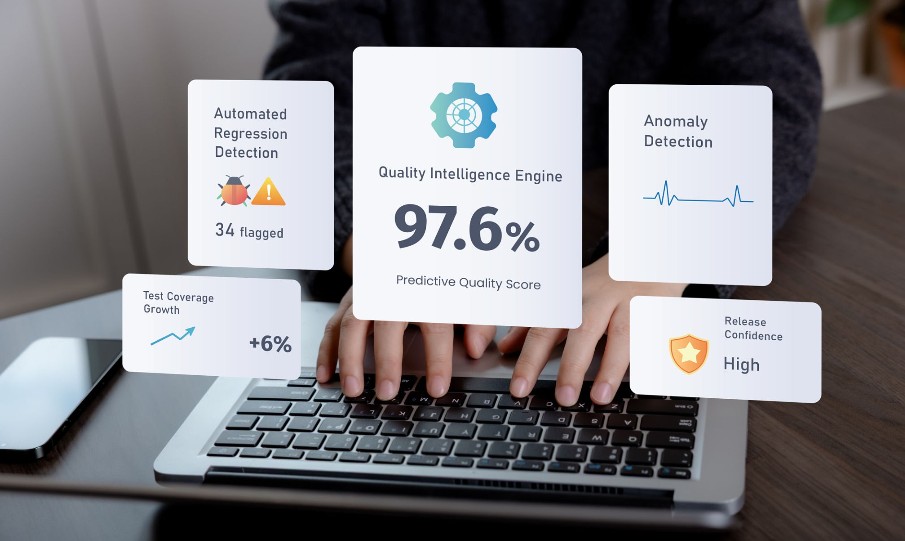
Automated software quality metrics and predictive bug detection dashboard
Modern QA combines automated pipelines, real-time observability, and AI-assisted test frameworks.

The Great Reinvention of Software Quality Assurance

If you ask a tech veteran what entry-level QA looked like a decade ago, they will describe manually executing test cases, verifying UI buttons, and logging issues inside Jira tickets after a sprint was completed. For years, quality assurance was viewed as an downstream validation phase—a human barrier between finished software and customer deployment.

In 2026, that historical barrier has been completely restructured. High-performing engineering teams ship code into production multiple times an hour using cloud-native microservices, container orchestrations, and automated deployment pipelines. Waiting three days for a tester to manually execute a regression suite is no longer viable in high-velocity tech companies.

Does this mean software testing is disappearing? Quite the opposite. As systems become more complex and decentralized, software quality is more critical than ever. However, the nature of the discipline has changed. Freshers entering the industry in 2026 are not being hired as repetitive manual testers; they are being hired as technical guardians of software velocity. Here is the definitive breakdown of the core skills, modern toolsets, and architectural trends defining QA testing today.

1. The Non-Negotiable Skills for Freshers in 2026

A successful transition into modern Quality Engineering requires moving beyond basic test-case templates and embracing practical, programmatic capabilities:

A. Fluency in Modern Scripting and Programming

You cannot test modern software systems without being able to read and write code. Industry recruitment panels expect freshers to possess solid fluency in at least one primary programming language:

  • TypeScript / JavaScript: The undisputed language of modern web development and front-to-back testing frameworks.
  • Python: Highly favored for backend automation, API validation suites, and AI/ML pipeline testing due to its clean syntax and extensive package ecosystem.
  • Core Programming Fundamentals: Understanding asynchronous operations (promises, event loops), object-oriented principles, modular architecture, and structured data handling (JSON/YAML).

B. API-First Validation and Microservice Mechanics

The majority of critical defects in distributed software never appear on the user interface—they occur in data serialization, network latency, broken contract schemas, and authentication failures between microservices. Quality engineers prioritize testing APIs over testing visual buttons. Freshers must understand REST conventions, status code implications, GraphQL queries, and auth flows (JWT, OAuth 2.0).

C. Git and Pipeline Mechanics (CI/CD)

Automated tests that only run on a candidate’s local laptop offer minimal value to an engineering team. Modern QA professionals operate directly inside source-control systems:

  • Branching models, resolving merge conflicts, and writing clean pull request reviews.
  • Constructing CI workflows using GitHub Actions or GitLab CI that automatically trigger test jobs on branch pushes and produce clear failure diagnostics.
Intelligent automated software testing and debugging workflow illustration
Modern test automation balances end-to-end user journeys with granular, continuous API contract validation.

2. The Essential QA Toolchain for 2026

Knowing the theoretical foundations of testing is useless without familiarity with the tools companies actually deploy. Below is the modern toolstack separating job-ready candidates from the rest of the applicant pool:

End-to-End Web & Mobile Automation

  • Playwright: The industry standard for browser automation. Offers native support for multiple tabs, auto-waiting, network mocking, and resilient selectors across Chromium, Firefox, and WebKit without third-party drivers.
  • Cypress: Widely adopted for component testing and rapid developer-centric UI validation.
  • Appium & Maestro: The leading choices for mobile test automation, with Maestro gaining significant traction due to its fast, declarative YAML syntax.

API & Performance Verification

  • Postman & Bruno / Newman: Moving beyond manual GUI requests to executing automated Postman/Bruno collections via CLI in continuous deployment pipelines.
  • REST Assured / Pytest-Requests: Programmatic HTTP client libraries for deep backend integration testing.
  • k6: The modern, developer-friendly load and stress-testing tool written in Go that executes test scenarios scripted in JavaScript.

Observability and Issue Tracking

  • Log & Metric Inspection: Understanding how to read runtime logs via tools like Datadog, Grafana, or basic ELK stacks to pinpoint root causes rather than simply reporting “the button didn’t work.”

3. The Defining Trends Transforming QA

Staying competitive in the QA job market requires understanding where the industry is heading over the coming years:

A. AI-Assisted and Self-Healing Automation

AI has fundamentally altered how testing frameworks maintain themselves. Traditional locators (like brittle CSS selectors or complex XPaths) that routinely broke after minor UI re-renderings are increasingly augmented by self-healing mechanisms. These algorithms monitor application changes and dynamically update element references during test execution. Furthermore, generative AI tools are routinely leveraged to produce edge-case matrices, synthetic test records, and regular expression patterns in seconds.

B. Shift-Left and Shift-Right Quality

Testing is no longer restricted to a discrete verification phase midway through a release cycle:

  • Shift-Left: Quality engineers participate in early sprint planning and architecture sessions, conducting risk assessments and writing unit or component test criteria before developers write production code.
  • Shift-Right: Quality extends into production environments through canary deployments, feature flags, synthetic user monitoring, and chaos engineering exercises.

C. Security and Non-Functional Verification

Security is no longer isolated in a separate cybersecurity department. Quality engineers are increasingly tasked with baseline security hygiene—checking for SQL injection vectors, validating Cross-Origin Resource Sharing (CORS) rules, inspecting header protections, and auditing third-party open-source dependencies for known vulnerabilities.

4. Actionable 60-Day Roadmap for Freshers

If you are a fresher looking to build credible proof of competency before applying for QA or SDET roles, follow this focused timeline:

  1. Days 1–15: Code & APIs: Solidify your JavaScript or Python fundamentals. Master HTTP protocols and write automated API assertions using requests or SuperTest.
  2. Days 16–35: Modern UI Automation: Build a Playwright framework from scratch using TypeScript. Implement the Page Object Model (POM), configure multi-browser support, and incorporate automatic screenshot captures on failure.
  3. Days 36–45: CI/CD Pipeline Integration: Push your testing repository to GitHub. Configure a GitHub Actions workflow that executes your automated tests headless on every pull request and generates HTML test summary reports.
  4. Days 46–60: Project Deployment & Documentation: Add performance benchmarks with k6, link your live project on your resume, and write a detailed README.md articulating your test strategy, design decisions, and CI setup.

Final Thought: The role of the software tester has evolved from a passive bug reporter into a versatile software engineer specializing in quality. By dedicating your efforts to programming fundamentals, modern automation frameworks like Playwright, and automated CI/CD pipelines, you will enter the 2026 tech job market not as a replaceable manual tester, but as an indispensable engineering asset.

IT Students: Your Degree Is Not Enough — Start Preparing for the Real IT Industry

IT Students: Your Degree Is Not Enough — Start Preparing for the Real IT Industry

Student developer writing application code across multiple displays
Production engineering prioritizes deployment, debugging, and system integration over memorized syntax.

The Illusion of the College Transcript

Every year, hundreds of thousands of students walk across graduation stages holding degrees in Computer Science, Information Technology, and related engineering disciplines. Many carry solid GPAs, clean attendance sheets, and formal project completion certificates. Yet, within months of entering the job market, an uncomfortable reality sets in: having a degree simply qualifies you to submit an application—it does not make you employable.

Academic institutions are built to teach enduring theoretical foundations: set theory, automata, memory allocation concepts, and formal database schemas. While these foundations are valuable, university syllabi move at an academic pace, while the tech industry moves at sprint velocity. Engineering managers do not hire freshers to recite definitions of runtime polymorphism on a chalkboard; they hire developers to debug broken builds, consume external APIs, and push clean commits into live pipelines.

If your entire preparation strategy begins and ends with clearing college exams, you are training for a race that isn’t being run. To succeed, you must understand what modern engineering teams actually evaluate.

1. The Gap Between Academic Assignments and Production Code

In college, coding tasks are usually isolated exercises: a single main.py or Solution.java file that accepts static input, performs an algorithm, and prints output to the terminal. In the real world, solitary code almost never exists.

Production software involves massive, shared, living systems. Preparing for the industry means knowing how to function inside those systems:

  • Reading Other People’s Code: Real work rarely involves writing software from a blank slate. More than 70% of a developer’s time is spent reading, tracing, and refactoring existing legacy architectures without breaking existing functionality.
  • Defensive Programming and Error Handling: College code rarely tests for network timeouts, bad JSON structures, or database disconnections. Production code must handle edge-case failures gracefully without crashing the server.
  • Package Managers and Toolchains: Real applications depend on third-party libraries, environment variables, lockfiles, and configuration wrappers—tools rarely covered in standardized coursework.
Modern developer workstation showing code on monitor with terminal open
Real-world development centers on terminals, version control history, and deployed cloud endpoints.

2. Git and Version Control Are Non-Negotiable

It is still remarkably common for final-year engineering students to coordinate team projects by emailing zipped folders named final_project_v2_final_edited.zip. In a software enterprise, this workflow is an instant red flag.

Version control is not a bonus skill—it is the baseline grammar of professional software engineering. Before graduating, every student should comfortably understand:

  • Branching models, merge requests, and code review etiquette.
  • Resolving merge conflicts calmly using a terminal or modern diff tool.
  • Writing clear, structured commit messages that explain why a change was introduced, rather than just what was typed.

A public GitHub profile showing consistent commit history, genuine pull requests, and well-documented README files communicates more credibility to a hiring manager than an entire page of listed coursework.

3. Tutorial Projects vs. Real Proof of Work

Hiring teams review hundreds of resumes every week that feature identical portfolio projects: an unstyled To-Do list, a boilerplate weather app calling a free API, or a clone of Netflix copied verbatim from a four-hour video tutorial. These projects demonstrate that you can follow directions, but they don’t show that you can build or troubleshoot independently.

To cut through the noise, build things that force you outside your comfort zone:

  1. Deploy Your Work: If an application only runs on localhost:3000, it is half-finished. Deploy it to a live cloud host, configure a free custom domain, and wire up automated build checks.
  2. Build for Real Users: Build a simple tool for your college department, a tracking utility for a local business, or an automation script that simplifies a routine problem. An app with five real users and genuine bug reports is vastly more impressive than three tutorial clones.
  3. Contribute to Open Source: Pick an open-source tool you use regularly. Start small—fix an issue in the documentation, resolve an edge-case bug flagged on their tracker, or write a missing unit test. A merged pull request proves you know how to operate in a real engineering environment.

4. Soft Skills and Engineering Communication

One of the biggest misconceptions among engineering students is that software development is a solitary act of quiet genius. In reality, software engineering is an exercise in human alignment.

Teams run on concise asynchronous communication: documenting API contracts, writing bug reports that engineers can actually reproduce, summarizing blockers in standups, and explaining trade-offs to non-technical stakeholders. If you cannot explain your technical decisions clearly or take critical feedback on a pull request constructively, your technical capabilities will remain bottlenecked.

Take Ownership of Your Education: Your college degree validates that you possess the discipline to finish a multi-year academic program—it does not promise that you are ready to ship software on day one. Treat your degree as a foundation, not a finish line. The students who thrive in today’s demanding market are those who take ownership of their craft long before graduation day arrives.

The Reality of Indian IT: Why Fresher Hiring Has Slowed and Starting Pay Has Stagnated

Software developer working across multiple monitors in an IT office
Modern software development demands immediate practical productivity rather than textbook theory.

The Shifting Ground of Campus Placements

For more than two decades, obtaining an engineering degree in India was considered an almost guaranteed gateway into a steady corporate career. Mass hiring by IT service giants formed the financial backbone of millions of middle-class households. Hundreds of students from tier-2 and tier-3 colleges would receive offer letters before writing their final semester exams.

That predictability has largely vanished. Today’s graduates face endless screening rounds, unacknowledged job portal submissions, delayed onboarding schedules, and an intense screening process where a single vacancy attracts hundreds—sometimes thousands—of applicants.

Simultaneously, the financial incentive at the entry gate has thinned. Entry-level compensations that hovered around ₹3.0 to ₹3.5 LPA a decade ago have barely shifted, rarely exceeding ₹3.8 to ₹4.5 LPA in traditional service tracks. To make sense of this new reality, one must examine the macroeconomic shifts, structural imbalances, and changing client expectations redefining India’s technology sector.

1. The Sheer Mathematics of Oversupply

India produces approximately 1.5 million engineering graduates every single year across thousands of accredited colleges. A substantial majority of these graduates, regardless of whether their major was Mechanical, Civil, Electrical, or Electronics, ultimately look to software development and IT support for their initial employment.

While the Indian IT industry continues to grow overall, the total volume of new entry-level roles added each year does not match this deluge of graduates. When supply so dramatically outstrips demand, the hiring dynamic shifts from selection to elimination.

Recruiters no longer have the bandwidth to review resumes manually. Instead, they deploy stringent automated applicant tracking systems (ATS) and complex multi-tier aptitude screenings. A slight drop in a college percentage cutoff or a missed test score can disqualify hundreds of qualified candidates before a human reviewer ever reads their portfolio.

A candidate undergoing a competitive campus placement interview panel
Intense competition turns entry-level placement rounds into aggressive elimination drives.

2. Death of the “Bench” and the Shift to Lean Squads

In the past, the business model of Indian IT services relied heavily on billing global clients by the hour through the classic “pyramid model.” A project would retain a few senior architects, a layer of mid-level project managers, and a massive foundation of junior engineers assigned to basic maintenance, manual testing, and repetitive scripting.

That billing mechanism is rapidly transforming. International clients increasingly demand outcome-based pricing rather than time-and-materials billing. They want working software delivered in rapid sprints, not large headcounts sitting on billable hours.

Furthermore, internal developer automation suites, generative tools, and low-code utilities have elevated the baseline productivity of individual engineers. Where a task previously required five freshers handling routine tasks under supervision, two junior engineers armed with modern tooling can now complete the same scope. Consequently, companies have sharply reduced their “bench size,” refusing to stockpile junior engineers without active billing commitments.

3. The Practical Skill Divide in College Curricula

A persistent challenge in Indian engineering education is the gap between institutional syllabi and production engineering. Many universities still evaluate students on memorized syntax, pen-and-paper algorithm writing, and dated database schemas that bear little resemblance to modern cloud architectures.

When engineering managers interview freshers today, they are rarely looking for candidates who merely recite definitions of polymorphism. They look for practical competency in environments that mimic actual development:

  • Proficiency with distributed version control systems like Git and GitHub.
  • Familiarity with containerization concepts like Docker and basic cloud deployment flows.
  • Understanding API lifecycles, microservice interactions, asynchronous code, and relational vs. NoSQL tradeoffs.

Because many new hires require four to six months of foundational retraining before they can contribute to client deliverables, companies treat early tenure as a net-loss investment. This onboarding overhead suppresses starting base salaries.

Modern software development workstation showing code on a display
Production-ready engineering skills—APIs, system debugging, and cloud tools—differentiate successful candidates.

4. The Economics Behind Wage Stagnation

The stagnation of entry-level tech salaries is an exercise in basic labor market economics. When hundreds of candidates are ready to accept any offered compensation package simply to gain the brand name on their resume, employers face virtually zero economic pressure to adjust starting base pay upward.

Adjusted for inflation and urban living costs in tech hubs like Bengaluru, Pune, Hyderabad, and Gurugram, an entry-level package of ₹3.5 to ₹4 LPA today offers significantly less purchasing power than an identical nominal package offered in 2012. After accounting for shared rents, security deposits, daily commuting, and food expenses, freshers often find their discretionary savings severely constrained.

Higher compensation bands (ranging from ₹8 LPA to ₹20+ LPA) exist, but they are concentrated in specialized product firms, high-growth startups, and competitive differential-hiring tracks within service companies that demand deep algorithmic mastery and live code execution.

5. How Freshers Can Navigate the Modern Landscape

Despite these headwinds, software engineering remains one of the largest engines of economic mobility in the country. What has changed is that the generalist route is no longer a dependable shortcut. Freshers must construct tangible proof of their technical capabilities:

  1. Ship Functional Projects: Move beyond basic tutorials. Build and deploy applications that solve measurable problems, handle real traffic, handle error states cleanly, and are deployed on real infrastructure.
  2. Contribute to Open Source: Demonstrating merged pull requests on existing codebases proves that you can read other people’s code, follow styling conventions, and handle collaborative version control.
  3. Target Niche Ecosystems: Instead of competing with millions of candidates in generic web dev stacks, explore high-demand specializations such as cloud automation, distributed databases, cyber defense, or data pipeline engineering.
  4. Look Beyond the Service Giants: Early-stage tech startups, mid-tier domestic SaaS companies, and non-tech enterprises modernizing their internal workflows often offer greater ownership, faster learning curves, and competitive starting stipends.

The era of treating an engineering degree as an automatic ticket into a corporate IT campus is over. The contemporary tech market values working proficiency over paper credentials. Freshers who invest their undergraduate years in practical implementation, modern systems, and continuous personal projects will continue to break through the crowd and secure fulfilling careers.

error: Content is protected !! Unable to Copy or Paste